Sunday, December 11, 2016

Predatory Publishers

After a long break blogging due to too much work in the last months, it is time for a small lighthearted post. Lighthearted, but nonetheless on an important topic: predatory publishers.

In order to keep at least partially in mind the basics of (my own) ethics (and to not provide free advertisement for journals which really do not deserve it), I will elegantly blur all the names of the journals by using fake names. The adventures I will describe here are however true, and happened a few weeks ago.

Opening my email box in the morning (something that we should all avoid if we are planning to have a nice day), I was surprised to see that I got an email from "International Current Frontiers in Dental Health" (this name is a fake), which was something as follow:

"Dear Dr. Matthieu Guitton,

Congratulations of the day! I have read your paper "The importance of studying the dark side of social networks" with great interest (common, I hope you did ! It is one of my papers afterall !), and I can tell that you are an expert in the field.

Therefore, I would like to invite you to submit a paper in the International Current Frontiers in Dental Health."

Oh my, you could see that I am an expert in dental health (dental health! DENTAL HEALTH!!!!) by having read a one-page editorial on cyberpsychology? Well, I knew I was a great writer, but that you could see from this one page text absolutely unrelated to dental health that I am a world expert in this field ... I am flattered. Or, wait ... Would that mean that you actually did not read my paper?????

But it gets better (yes it does).

The same day, I received three invitations from "World Global Journal of Internal Medicine" (this name is a fake). First, before going to the content of the emails and invitations, I need to make a small note on the sender himself. As indeed, the emails were coming from a person named "Silvester Stallone" (this person was also, according to the journal address, from Pakistan).

So, it is already quite uncommon from someone in Pakistan to have Stalone as a family name. But to be so unlucky so that your parents would name you "Silvester" in addition ... and that you would have, once adult, to send emails world-wide to international scientists ... Really, what an unlucky guy. Or maybe, be more imaginative (or at least natural) when taking a pseudonym if you want your journal to be taken just a bit seriously ?

Anyway, back to my invitations.

The first one went as follow:

"Dear Dr. Matthieu Guitton,

Greetings of the day! I have read your paper "Tinnitus: pathology of synaptic plasticity at the cellular and system levels" with great interest , and I can tell that you are an expert in the field (please note the originality of the rhetoric, quite different from the semantics of the invitation I got the same day from the previous journal).

Therefore, I would like to invite you to submit a paper in the World Global Journal of Internal Medicine."

Ok, maybe. Although I don't really see how tinnitus is connected to internal medicine, but why not? Oh wait, I just got a second email from the same journal ! Here it goes:

"Dear Dr. Matthieu Guitton,

Greetings of the day! I have read your paper "Tinnitus and anxiety: more than meets the ear" with great interest (ok, maybe the Editor-in-Chief has tinnitus and finds it a central topic in Internal Medicine), and I can tell that you are an expert in the field .

Therefore, I would like to invite you to submit a paper in the World Global Journal of Internal Medicine."

Mmmmm, of course I am still very flattered, but, well, now it is getting a bit suspicious.

Oh wait, I got a THIRD email in my box from the same journal !

"Dear Dr. Matthieu Guitton,

Greetings of the day! I have read your paper "Living in the Hutt Space: Immersive Process in the Star Wars Role-Play community of Second Life" with great interest, and I can tell that you are an expert in the field .

Therefore, I would like to invite you to submit a paper in the World Global Journal of Internal Medicine."

Seriously ??????
This paper deals with the Star Wars fan community, and specifically with people interested by the Hutts. How is that connected to internal medicine? To make this point clear, here is a Hutt:


Image result for hutt
This is a Hutt

Or maybe the Editor-in-Chief of the journal is really far-sighted and wants to help policy makers to take responsible decisions regarding racial susceptibility to obesity: with the Hutts being more prone to be overweighted than humans (we should remember than a healthy mature Hutt Lord such as Jabba the Hutt can easily weight up to one metric tone). I mean, good policy makers dealing with public health should take into consideration both human and non-human alien species ...

Sadly enough, I was afraid that the Reviewers (because I am sure that my paper that I would have submitted to this journal and (I forgot to mention it) would have been peer-reviewed with final decision within 2 days as mentionned in the invitation letter, and published for the friendly fees of 500 US Dollar) would not be as open-minded that the Editor-in-Chief, and that they might not see how studying the Star Wars virtual community would have a direct and significant impact on the advancement of our knowledge in Internal Medicine ... so I finally, and with a lot of hesitations, decided not to write and submit a paper to them and instead, well, work on serious papers for serious journals, maybe ?

Thursday, March 31, 2016

PCA/ACA 2016 and Fan Phenomena: Mermaids

Just coming back from the 46th Annual PCA/ACA Conference in Seattle, WA (well, technically I came back a few days ago, but we had chocolate eggs hunting in the meantime somehow). Like always when a meeting is held on the West Coast, there were slightly less people then when it is held on the East Coast or in central parts (even worse, last year it was in New Orleans, and that is a place difficult to compete with). Anyway, although there is always quite a huge variability in PCA/ACA talks (but that is due to the very nature of the topic of this conference I guess), the quality was once again there. I went to a few really interesting talks, coming back with new ideas and some new contacts of great people.

While individual presentations are of course of interest, it seems I am more and more drawn to the group discussions. Beside the open presentation I made in the Professional Development Area on “Publishing in the digital era: Presenting Computers in Human Behavior” which was a mix between thoughts and advices on publishing in the fields of Internet studies, Internet culture, and digital life, and on some specifics on Computers in Human Behavior (do I really need to say again all the good things I think about this journal? Obviously I am biased, but nonetheless it is a great media to publish all things related to cyberpsychology), I went to listen what people had to say in three roundtables. While the three of them where surprisingly excellent, one really deserves a few words. The “Game Studies XX – Roundtable on Teaching, Ethics, and the Future of Game Design: What are our Responsibilities?” from the always extremely vivid Game Studies Area was quite something. It was chaired by Dr. Josh Call who is Professor at Grand View University, and while the attendance was not that numerous (sadly it was in the evening and competing with quite a few other popular sessions such as the famous SFF screening), the discussions there were tremendous and thought-provoking (at least in my opinion). It was way too short to tap into all the potential of the issues which were raised there, but definitively, it was good having some serious group-thinking about these topics.

Oh, and yes, my talk on merfolk (“From fantasy, to virtual spaces, to reality, and back: Structuring the (online) merfolk community”, presented in the “Identity in Online Communities” session of the Virtual Identities and Self-Promoting Area) went really well! And related to that, the awesome book “Fan Phenomena: Mermaids” from Intellect is finally out!

It is available directly from UChicago Press; for your convenience, the link is even just here:

Oh My! Mermaids in movie, in popular culture, online merfolk community, and much more…
You KNOW you want to get it!
As all of the Fan Phenomena series of Intellect books, this opus combines scholars’ essays with the point of view of some leaders of the fan community (in this case, three amazing persons, the mermaid Hannah Fraser, the (virtual and real) Gold Mermaid Cynthia, and the mermaid instructor Marielle Chartier). And if you are into Internet studies (there is a lot of stuff related to the formation of online communities, and how online communities can have real-life impacts), film studies (obviously), fan studies (with three amazing non-scholar contributors, as well as in-depth analyses of the structure of the merfolk fan community), or cultural studies in general, I believe you might find it of interest.

Thursday, February 18, 2016

Can qualitative research help us to avoid hitting the wall in biomedical research?

Like many people I assume, I have been looking the recent exchanges between Prof. Trisha Greenhalg (Oxford, UK, see here her letter ) and the editors of BMJ (their answer can be found here ).

Obviously, this debate appeals greatly to me, as I am both a researcher heavily relying on mixed (quantitative/qualitative) approaches, and an Associate Editor for a journal ( Computers in Human Behavior ) which covers a field in which both quantitative and qualitative studies are to be found (as a disclaimer, the opinions stated below are mine and not those of the whole editorial board of the journal – although I am quite sure that most would share my views on this matter). We actually had quite a few discussions about this exact topic in the last few months with the students in the lab.

Anyway, I think if we take biomedical research as a whole, we all would agree that we are currently “hitting a wall”. Despite a sheer number of research groups which has probably never been so high, most of the research currently published does sadly not translate into major advances to patients’ bedside. We are accumulating studies after studies without being able to truly see a measurable impact on treatment outcomes, on efficiency of public health systems, and, ultimately, on patients’ health. Not that we are not progressing, rather, the progresses are slower than what we should be expecting.

In order not to hit this wall, we might need a paradigm shift. Could this paradigm shift be related to qualitative methods? Indeed, there are increasing numbers of researchers who turn back to qualitative methods to document various health-related phenomena. Qualitative research has always been around, and sadly, it always has been opposed to quantitative research. Who is guilty? I am not actually sure. Of course, “hardcore” scientists will all claim that qualitative research has no value, but I have heard quite a few times qualitative researchers saying the exact same about quantitative research. In both cases, such statements are (sorry to say, but it is true) stupid. What makes the value of a methodology, is its adequacy to answer the question we ask. If answering a question needs quantitative analyses, fine. If it would require another perspective – one that could be brought using qualitative methods – then so should it be.

As I just mentioned, I think that since a few years, more and more people are seeing that we were missing something by focusing only on large-scale measurable data. Nonetheless, the perception of qualitative research by a lot of journal editors (not to mention funding agencies) is still rather negative.

Given that as a researcher I am regularly doing research using mixed approaches, as an Associate Editor, I am obviously highly sympathetic to studies relying on such methodologies. In other words, I am not immediately turning down a study because it is solely a qualitative study. Does that mean that I will consider that any qualitative study is inherently good? Certainly not. Sadly, here come some of the issues that we are facing with qualitative research. Some people believe that doing qualitative research is a good way to do research when one doesn’t want to deal with statistics or complex tools. But in qualitative research, there is the word “research”. And indeed, qualitative research is a form of research, with its own methods, limits, potential biases, and so on. Furthermore, it is a field which is – like any given field – evolving. Unfortunately, not all qualitative researchers understand that: a common response I get from authors once their papers have been rejected by reviewers for methodological concerns (and here, I want to state again that I am familiar with such methods, so I make a lot of efforts to try to get reviewers which are competent in qualitative methods when such a paper is submitted), is typically going like that “in his paper, X said in 1980 that this approach is appropriate”. Sure, but we are in 2016 … let me count, 1980 was (my, I am getting old) 36 years ago. Your field is so numb that it did not evolve at all during 36 years? Probably not, update your methods. Second point, not all qualitative approaches are appropriate for all situations. Sometimes, a qualitative strategy was appropriate for a given situation, population, whatever, but is not for another one. Another point to consider regarding methods (and the necessary updates in qualitative methods). Back in the years, when I was younger, we were able to publish papers in mice behavior with just one behavioral test, and one experimental drug. And we were able to publish that in high impact factor journals at these times. Now, just to get in a moderate impact factor journal, you would need a dozen of behavioral tests, the same amount of drugs, and a bit of molecular biology on the top to get some “mechanistic explanation”. Well, the methodological quality requirements of quantitative research have jumped up (I know it is not the case in such magnitude for all fields, but still). So, it is legitimate to assume that people are expecting qualitative research methodology to be updated too. And some qualitative research do just that. Those papers should indeed be published, and receive the attention they deserve. Which leads me to the next point.

Not all research is good. Of course, there are a lot of bad quantitative research too. But in the case of bad quantitative research, it might create a (transitory) illusion: bad quantitative research does not necessarily look instantaneously bad. If you read it quickly, you might think it is plausible research. This is not the case for qualitative research: badly done qualitative research usually looks bad. So, from an editor point-of-view, when a paper goes to an editor, a “bad quantitative research” might pass the first quick screening and be sent to review, while a bad qualitative research will probably immediately get blocked by the editor – and not sent through the reviewers. That doesn’t mean that the bad quantitative research will pass (usually it doesn’t). That might give a bad feeling to some qualitative researchers. But trust me my friends, the proportion of quantitative research getting rejected is very high too ! When I say that, I am CERTAINLY NOT saying that all qualitative research papers which get rejected right by the editor are bad. Indeed, I fully agree with the statement of the letter of Prof. Greenhalg et al., that editors need to be educated in qualitative methods (if they are, then they will select appropriate reviewers). But with the working load we are all having, I understand an editor unfamiliar with qualitative research rejecting systematically qualitative papers after having had a brunch of them rejected by the two reviewers, with rough comments sent to the editor (“why the hell are you sending me that to review?”). Rather than forcing journals to accept one qualitative paper a month (quotas are not always the best way to do things: a study should be published if it is good, not because we need one per month), a way to change this perspective could be to include in the editorial boards of major journals some specialists of qualitative or mixed methods - so that GOOD qualitative research papers are given a fair chance and can undergo a fair peer-review process.

I have seen the argument that “qualitative papers don’t get cited”. Well, that is obviously not true. GOOD qualitative papers get cited. Like any paper, it is impossible to predict the fate of a paper in terms of citations just by defining its type. If decades ago, a review was sure to attract a fair amount of citation, with the considerable increase of the number of papers which get published on a daily basis, reviews are not necessarily more cited than experimental papers nowadays. While of course, I understand that some editors might consider the potential of citation in the decision process, it is and should not be the main point to consider. The main point is the quality of the study, its value for the field. And with that in mind, qualitative studies, when well done, can be of considerable value.

Finally, a question that I am asking myself quite regularly: is this qualitative/quantitative debate a real debate? I am actually not sure. I believe that we should be able to go beyond those old ghosts, and all (editors, reviewers, but also authors) become mature enough to understand that if we want to make real changes in patients’ life, the “truth” need to be approached by different, yet complementary angles. Depending on what we want to explore, we might need time to time quantitative tools, time to time qualitative tools, and I believe more often, both at the same time. The insights of qualitative approaches are incredibly valuable. But so are the data obtained through quantitative analyses. In my opinion, only combining both will allow us to crush this damn wall, and to go further.

Tuesday, October 6, 2015

Book Review: Handbook of Research on Holistic Perspectives in Gamification for Clinical Practice

Obviously I am biased.
Nonetheless, this book is quite an interesting opus.

Handbook of Research on Holistic Perspectives in Gamification for Clinical Practice

It can be found here.

Health games are becoming quite a popular trend now, and given their potential, it is indeed legitimate. We hear more about that regularly in the media, and we see more and more of them at specialized conferences. As for myself, as one of the associate editors of Computers in Human Behavior, I can see that more and more papers are submitted - and get published - on this topic. However, I can also see that Reviewers are getting more and more familiar with health games, and, therefore, that they are getting more and more strict in what is good and should be published ... and what is less strong should be rejected.

Therefore, it is critical for people working on this field, or willing to work on this field (and that is obviously true for researchers interested in getting their work published, but also, and maybe more importantly, for clinical specialists willing to develop optimal applications using and based on the most up-to-date knowledge in the field) to know what is going on around, and to know what is the state-of-the-art in health games. That being said, finding a single source which would cover topics as diverse as one could expect to meet in developing an health game paradigm is almost impossible.

This book answers this need. Interestingly, this handbook is that the approach it takes is an heuristic approach. Thus, the various chapters of this book cover very various topics, from angles and perspectives not commonly seen in the field (let's take for instance my own chapter (the Chapter 1: Ethical Challenges in Online Health Games) specifically deals with some ethical aspects of health games - a topic which is obviously extremely important, but which would classically not be covered in a conventional book on health games focusing more on technical approaches or applications to specific pathologies). Don't get me wrong here, this book also covers some of the technical issues and provides examples of      applications to specific pathological conditions. But it goes further, and thus offers a more globalized ("heuristic", huh !) of this emerging field.

For those not familiar with the format of IGI books, there are also a few characteristics which makes this handbook extremely useful and convenient :
- First, the book is made in a truly didactic way. For each chapter, in addition to the main text, there are summarizing tables, key definitions, etc ... making this book a pretty good pedagogical tool in the lab, if you have, let's say, graduate students beginning on this topic and coming from field not related to gamification or health games (such as psychology, conventional health sciences, etc ...), or even coming from fields related to Internet studies, but lacking a specification on online health.
- Second - and I would say that this is of major interest for researchers willing to gain time - all the chapters have, in addition to the references mentionned in the main text, a list of supplementary references, specifically selected for their relevance to the topic of the chapter. Given that all the chapters have been peer reviewed by experts in health games, this makes the book a fantastic resources to locate the "must-to-read" basic references in the field ... hence to get some fundamental information before stating anything on this topic.

In conclusion, this book would definitively find its place - and that would be a place handy, easy to access since it is going to be accessed quite regularly - on the shelves of the personal library of any researcher or health specialist interested in health games.


And if you are interested by this topic in general, I would also recommend to read our "My avatar is pregnant" paper from Dr Anna Lomanowska and myself:

Lomanowska AM, Guitton MJ (2014) My avatar is pregnant! Representation of pregnancy, birth, and maternity in a virtual world. Computers in Human Behavior, 31:322-331. [PDF]

Thursday, July 2, 2015

Literature Review

An excellent article recently published in Computers in Human Behavior is getting some well-desserved recognition: Lepp A, Barkley JE, Karpinsky AC (2014) The relationship between cell phone use, academic performance, anxiety, and satisfaction with life in college students, Computers in Human Behavior, 31: 343-350 (see here), by Andrew Lepp and colleagues, got nominated in the Computing Reviews' 19th Annual Best of Computing list as a "Notable Article in Computing - 2014". Once again, a well-desserved recognition for an excellent paper. It also points the excellence of Computers in Human Behavior, and its potential as a medium to publish top research in this field. This paper is an excellent exemple of what modern cyberpsychology is: interdisciplinary, multidimensional, and quite insightful. In any case, a highly recommended paper to read.

Wednesday, June 24, 2015

Computers in Human Behavior entering in the top 20 of psychology (multidisciplinary) journals !

The 2014 Impact Factors have been released, and once more Computers in Human Behavior is growing up ! Impact Factor 2013: 2.273 (5 years Impact Factor: 3.047), and now Impact Factor 2014: 2.694 (5 years Impact Factor: 3.624). Not only the Impact Factor is getting closer to the symbolic line of 3, but the 5 years Impact Factor is almost reaching 4 !

But Impact Factors are not what matter the most in terms of metric. Indeed, Impact Factors are just numbers, and they heavily depends on the size of the field. An Impact Factor of 2 does not mean the same if the journal it belongs to is a journal of molecular biology or a journal of computer-mediated communication.
So, while the growth in Impact Factor is great, what matter even more is the relative position of a journal among the other journals in the same field. And here come the real good news: Computers in Human Behavior entered this year the Top 20 of the journals in the "Psychology (Multidisciplinary)" category ! The ranking of Computers in Human Behavior in this category in 2013 was 24 out of 127, and it is 20 out of 129 in 2014.

The cherry on the top of the cake ? Well, Computers in Human Behavior also increased its ranking in the (arguably more competitive) category of "Experimental Psychology", reaching the rank 24 out of 85 (instead of 30 out of 83 in 2013), thus getting closer to enter the Top 20 there too.

Why is that so ? What can explain this success of the journal ? As a scientist, I have the flaw of looking for rational explanations for various phenomenons ... So, one reason is probably that the journal is pretty awesome: the Editors, Publisher, and all the people involved in it are doing an amazing job, and we can only be grateful to our authors and reviewers, who all contribute to the success of Computers in Human Behavior.
But there is probably more than that. First, the journal indeed is of great quality. Although the review process is never instantaneous, and although it can take several months in some case, we managed to keep the average time between submission and first decision relatively reasonable (for a journal receiving circa 2,000 submission a year, still). Second, the field has considerably evolved in the last few years. The methodologies have strengthened, the theories and the knowledge underlying cyberpsychology have expended, and as a result, the overall quality of the papers submitted (and thus, published), has greatly increased too. Better papers, more citations. Third, with the exponential advances in information technologies, virtual spaces are becoming prominent in our everyday life. What was once perceived by some at beast as an ectopic research subject is now becoming a topic of central interest. And Computers in Human Behavior being positioned as a leader in this field, the ranking in more general psychology-related fields is likely to get better. So, in conclusion, while those were good news, I hope to receive even better ones next year !

Friday, March 13, 2015

Mermaids, online intra-community communication and social density

Virtual communities are not necessarily independent from each other. Rather, it is quite the opposite. Indeed, people are usually member of several virtual communities, overlapping or not, and sometimes embedded within larger virtual communities. Therefore, a key question in understanding how virtual community is to understand how the members of the community can maintain contact in the ocean of possible virtual contacts. In other words, how is it possible for members of a community to maintain coherence in a diluted virtual environment? In a previous post, I was discussing how fantasy-based virtual communities can represent good models to approach general cyberpsychology question. Well, once again, this will prove to be true, as the merfolk community of Second Life is a perfect model to study this phenomenon.

The merfolk community of Second Life is a community which spontaneously emerged in the virtual seas of Second Life. However, compared to the number of land-dwelling avatars, the merfolk are ridiculously few. Thus, the question of how to maintain communication within the merfolk community was central in order of this community to exist. In our last paper, we studied the communication processes in the merfolk community, demonstrating how optimal communication strategy making an heavy use of redundancy allowed to keep high levels of social density (you can download the paper for free here, but just up to end of April : http://authors.elsevier.com/a/1QZRW2f~UVu9K5 ).

Guitton MJ (2015) Swimming with mermaids: Communication and social density in the Second Life merfolk community. Computers in Human Behavior, 48:226-235.

But actually, there is even more to learn from the merfolk. Today, we had the visit of Dr Louise Arseneault, Professor of Developmental Psychology at King's College London. After her though-provoking talk, she spent the day at our Institute to meet and talk with the PIs. During the fascinating discussions we had, we went to talk about cyberbullying (as she is a world-famous expert on the psychology of bullying), and I gave the example of various virtual communities and how conflicts are handled there, and particularly with the merfolk community which had a very efficient way to deal with such events, notably due to the communication strategies used and to the clear identification of mentors and advisers within the community. So, as it was with the Star Wars role-play community a few years ago, there is quite more than meets the eye under the level of the virtual sea.


A mermaid in the virtual seas of Second Life.

In case you would get interested by the merfolk option in Second Life, you can get all the information you would want at the Safe Waters Foundation Headquarters (just type "Safe Waters Foundation" in the place search engine of Second Life and it will bring you there), or look at their site: http://www.goldmermaid.com/SWF/ .

Friday, November 7, 2014

Comment: Providing better training and better career perspectives to graduate students

The fact that the way research is currently conducted in universities is not made optimally in terms of cost-efficiency and of student formation / career perspectives is something which is rather obvious, and which has been bothering me since some times. Thus, it was pretty interesting for me to read this opinion paper published in PNAS.

Alberts B, Kirschner MW, Tilgham S, Varmus H (2014) Rescuing US biomedical from its systemic flaws. Proc Natl Acad Sci USA, 11:5773-5777.

It is part of a larger debate (and it even is the target of some discussion even in LinkedIn groups (for instance the AAAS group). I would like to comment on two specific points of the paper.

First, the need to downsize academic research labs. I believe since already some times that the current model which promotes the existence of very big labs is not the best. First, while the senior scientist can direct numerous projects, especially in the same area of expertise, our time is still limited. Meaning that we spend more time doing administrative things than actual science. This also means that the time devoted to each trainee will be way smaller. When you have simultaneously 10 students and 5 postdocs in your lab, it is not reasonable to believe that you will give 1h of individual attention per day to each of them. Well, sadly, even 1h of individual meeting would be probably difficult, since we have quite a lot of other tasks to do as well. Universities want to have more and more student graduating, so we have in terms of career some interest to manage large labs. But what about the quality of the formation we provide? And of the mentoring we do? Not areas of research are the same. In molecular biology it is very common to see “hives” of students working in the labs, since a lot of the experiments follow very strict protocols, and maybe (and the maybe is important, as I am not that sure of that actually) requires less guidance by the supervisor. However, in the field I know the best, which is behavior (or cyberbehavior, but it is just a specific case of behavior in general), while the protocols are usually simple, what makes the difference is how you exactly do it. How you design the protocol, how you quantify the actual behavior, how you control for any bias not only when developing the experiment but also during the process (since behavior is a dynamic display). And more importantly, we need time and intense contacts to really “transmit” not only knowledge, but also our own experience to our students, so they can really learn and benefit from it. That is particularly true for a PhD student or a post-doctoral fellow. This type of relation is a one/one relation, where the word “mentor” takes all its meaning. However, there is a second element favoring the fact that big labs are growing. And that is an economic argument. A student costs considerably less than a regular employee. So it is easier to have a lot of students in the lab rather than a lot of workers. But are students only cheap workers? I would think no: first they are still learning, so their productivity is not at the best (and it shows, since the larger labs obviously have more publications than smaller labs, but often the number of publications per capita is lower). And second, and more important, they are learning skills to get a job later on. And here comes the issue that we are maybe forming too many students in some disciplines that what the needs really are. A lot of public funding is thrown to research for Alzheimer’s disease, which is rightly a major problem of public health in Western countries. However, these funds are used to form a lot of students in this topic. Most of them would love to do an academic career. Would it be reasonable to believe that universities will recruit every year dozen of newly formed researchers just on this topic? Of course, not. On the other hand, we are struggling to find specialist of research in the field of rhinology, while we do have teaching need for that, and while disease related to the respiratory system and superior aerial ways are critical as well. Downsizing the labs to more reasonable and manageable research units really centered on the professor research interests, and allowing a better, deeper form of trainingship for graduate students.

Which leads to the second point. We still need people to do the research: nowadays research is getting more and more complex and complicated, interdisciplinarity is a key word. Modern research relies on various expertises. Staff Scientists could be a solution, as suggested in the paper. It would increase the quality of the research done. It would provide some new positions for all the students we are forming. It would increase also the formation of the students by having more senior people around them. But there are still a few issues with that. First, such a solution would have a cost. We can not expect recruiting high qualified people without decent salaries. This would have to come from the funding we get ... while the actual tendency for research grants is more oriented toward decrease, and the current success rates are falling down. Second, the nature of the employer might be a problem. Would it be the researcher? Meaning that, if a researcher loss his grants, then the staff scientist would be fired? It would be very difficult to secure on the long term this key people. Would this people be hired directly by universities? While that might be an acceptable solution for research institutes, it is hardly something which can be defended in the context of universities. Also, not being the actual employer would mean that it would be the university who will decide with whom (with which researcher) the staff scientist will be working. With all the problems which can arise for that. And with the issue that they would be considered mainly as super-technicians and would see their intellectual contribution potentially decrease. A possibility could be to develop new types of grants, which would be accessible only for staff scientist, under the direction and projects of university researchers (but independent from the professor own grants), with a system of renewal akin to the system we have for career grants in biomedical research in Quebec province. It would of course some money, but the results for the efficiency of both academic-based research, and more importantly, student formation, might be worth the deal.

Friday, October 17, 2014

Comment: Star Wars, X-Files, Zombies, and Mermaids

Star Wars? Zombies? Steampunk???? Common, you are gotta kidding, it can not be real research!

Well, while I please myself to think I am quite humorous (I know that it is the matter of heated debates in my laboratory), I am in fact not kidding. For those interested in studying virtual communities, virtual communities related to science fiction or fantasy universes are of the highest interest. Why so? There are quite a few reasons to that. I will not go over them here; if you are interested by that, I will gladly refer you to our papers.

Guitton MJ (2012) Living in the Hutt Space: Immersive Process in the Star Wars Role-Play community of Second Life. Computers in Human Behavior, 28:1681-1691.
Guitton MJ (2011) Immersive role of non-required social actions in virtual settings: the example of trade role-play in the Second Life Gorean community. Design Principles and Practices: an International Journal, 5:209-220.

But in fact, if we go back to the “good ol’ time” (and in the field of cyberpsychology, a few decades are already an eternity), it all began there. Let’s take one of the papers considered as seminal in the field of study of virtual communities, the famous paper of Kozinets 1997.

Kozinets RV (1997) I Want to Believe: a Netnography of the X-Philes’ Subculture of Consumption. In Brucks M, MacInnis DJ (eds.): NA - Advances in Consumer Research Volume 24. Provo, UT : Association for Consumer Research, pp. 470-475.

Back then, Kozinets was interested in the structure of a virtual community in a eMarketing logic (or what would later on be referred to as eMarketing). For that, he by the way had to define a new methodological approach, which he named “netnography” (InterNET ethnography – a term which got quite a successful fate, although now the term virtual anthropology might be favored). And which community was he studied? The community of the fans of X-Files! Yes, Agent Mulder and Agent Scully…


Scully, do you believe?

No offence intended to X-Files fans… but it is not what we immediately associate with rocket science. Nonetheless, the work of Kozinets was instrumental in developing the field of eMarketing (and is rightly acknowledged as so).

Similarly (at our modest scale), researching the virtual communities of Star Wars and Gorean role-players in Second Life helped us to unveil some really fascinating mechanisms underlying the structuring of virtual communities at large. And studying the communities of players of Zombie apocalypse games provided very interesting insights in the way moral dilemmas are resolved in extreme survival situations.

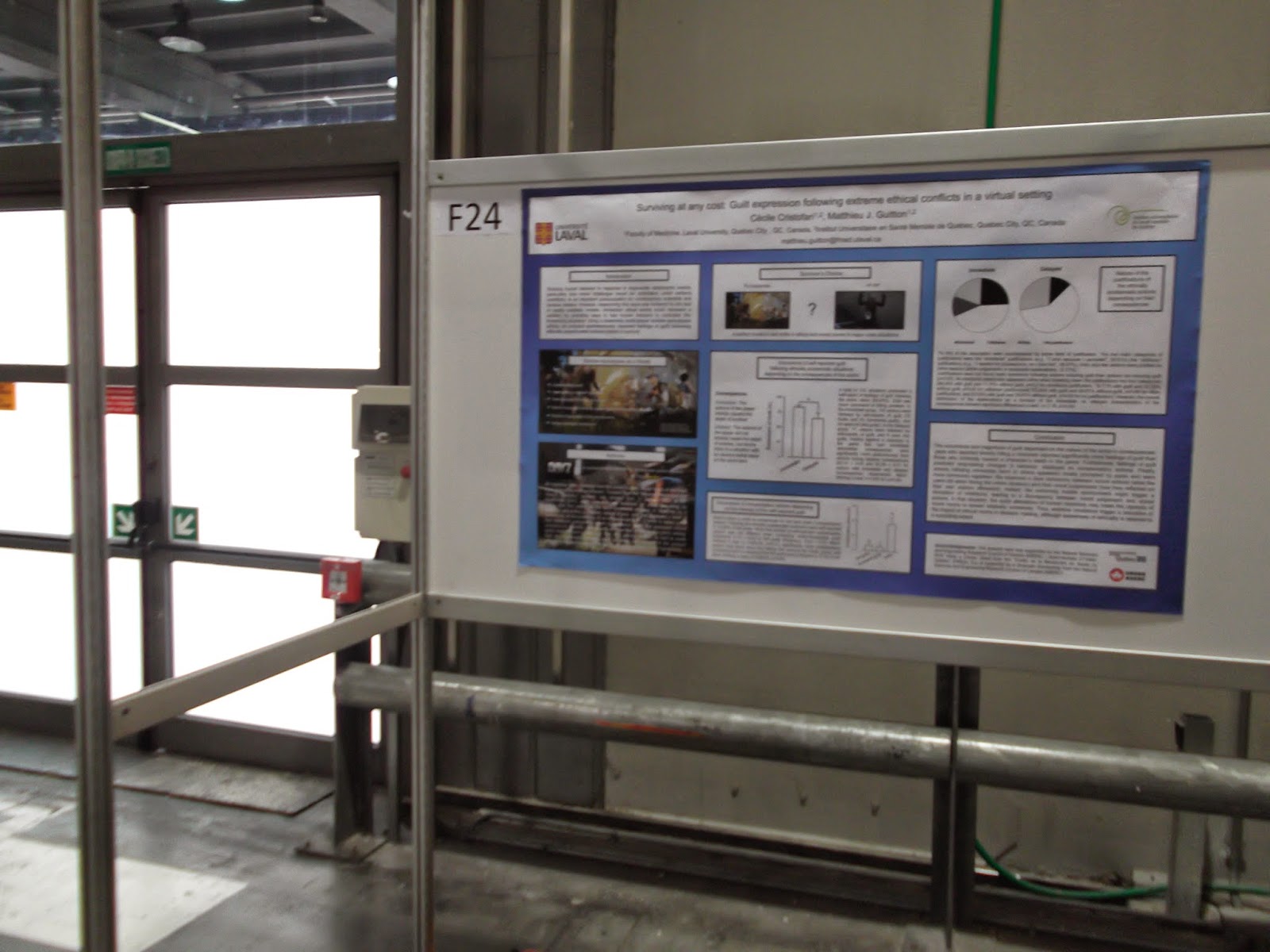
Cristofari C, Guitton MJ (2014) Surviving at any cost: Guilt expression following extreme ethical conflicts in a virtual setting. PLoS ONE, 9:e101711

While the X-Files fan community, the Star Wars Role-Play community, or the Gorean communities refer to imaginary settings which follow a defined set of rules (a “canon”), some science fiction or fantasy communities are not united by a predetermined and restrictive corpus. That’s for instance the case of the Steampunk community, or of the Mermaids community in Second Life. However, these virtual communities are still potentially providing us a lot of information. For instance, studying the Second Life Steampunk community allowed us to develop a new tool to “map” the perceived distance between communities by quantifying their aesthetics (paper just accepted a few days ago, soon more on this blog!).

So, yes, even if it might look surprising, this is real research. With the fun as a bonus.


A mermaid in the seas of Second Life.

Thursday, July 24, 2014

Journal Metrics - Computers in Human Behavior

Well, we just got the new Journal Metrics today, and once again Computers in Human Behavior is doing really well ! In fact, the impact grew significantly for all of the markers.

If we take the SNIP (Source Normalized Impact per Paper: an impact factor weighted by the relative size of the field):
SNIP 2011: 2.133
SNIP 2012: 2.151
SNIP 2013: 2.408

The SJR (SCImago Journal Rank: a global prestige evaluation) follows the same trend:
SJR 2011: 1.577
SJR 2012: 1.589
SJR 2013: 1.791

The IPP (Impact Per Publication: which shows the ratio of ratio of citation per article published) is even better !
IPP 2011: 2.826
IPP 2012: 2.908
IPP 2013: 3.281

Which is likely to be reflected in the up-coming more conventional Impact Factor.
Sure, all of these metrics are just proxy (such as the Impact Factor, by the way), but still, they show us that the journal is doing really well, and that we are confirming its position as a recognized leader in the field.

Saturday, July 12, 2014

Lab Update

The last months have been rather busy, which explains somehow why I haven't been posting since quite some time. Well, time now to catch up with what happened recently in the lab! Today's post will deal with the meetings in which the lab was present in the last few months, and I will talk about our recent publications in another (latter) post.

In the last few months, we went to three really fascinating meetings, the PCA/ACA Meeting, the RAI Meeting, and the FENS Forum.

The 44th PCA/ACA National Conference (Popular Culture Association/American Culture Association) was in Chicago, IL, in April. Like always, it was an extremely interesting meeting for me. I love the PCA/ACA meetings for the incredible fresh ideas I get there, stepping from the so diverse approaches and points of view that are displayed there. Cécile Cristofari was also presenting some of our work on the Steampunk community of Second Life there, and got quite a nice feedback.

The Royal Anthropological Institute 2014 Conference: Anthropology and Photography, in the British Museum in May was as well an incredible event. I was the Convenor and Chair of the first session, which was entitled "Anthropology and photography in the digital age". Both Cécile Cristofari and myself gave a talk in this very symposium. We had an amazing feedback, and I was extremely surprised (and pleased) to see how much modern anthropology has incorporated cyberspaces in its practice. As well, I was (again) both surprised and pleased to witness the fact that Computers in Human Behavior had quite a good reputation among those anthropologists interested in the study of social media and other virtual worlds. Beside being in such a prestigious location than the British Museum, the quaility of the talks were mostly of the first order, and we came back with a lot of new contacts and ideas. I even wrote an editorial in Computers in Human Behavior about that (going to be out soon, hopefully). The meeting was preceeded by a few days that I spent at the Future of Humanity Institute of PRof. Nick Bostrom at the University of Oxford. A very interesting experience with a lot of inter-discplinary interactions, very valuable for me, and which elicited quite a few new ideas and angles of view for me.

Introducing the "Anthropology and photography in the digital age" Session
at the RAI Conference at the British Museum

Finally, the 9th FENS Forum of Neuroscience (Federation of European Neuroscience Societies) just took place last week in Milan, Italy. The FENS Meetings are always among my favorite ones, due to a few things, including (but not limited to) the fact that I get to see a lot of my old friends, the fact that peple are somehow less worried to show really innovative and not-yet-published studies (in contrast to the SfN meeting where people usually only show things ready to be published, or actually already published), and to the diversity of approaches in neuroscience that you can see across the different European countries. Now that what I do is slighlty different from purely molecular neuroscience (Well, I always was mostly involved in behavioral neuroscience anyway, but now the focus on interest has clearly drifted to cyberbehavior), I was expecting that what I was doing now would elicit considerably less interest that before among my fellow neuroscientists. Surprisingly for me, that was absolutely not the case. Maybe I got slightly less people at my poster (which was on moral decision making using zombie apocalypse massively online role-playing games as a model, the related paper just got published in PLoS ONE a few days ago) than when I was doing animal model of tinnitus, the quality of the feedback was amazing. I got people who were really interested in some of the various aspects of what we did: virtual spaces, cyberbehavior, decision making process... Who knows, maybe some interesting collaborations might follow?

The entrance of the FENS Forum, at the center of congress of Milan.

Our poster, conveniently located close to an emergency exit...
with zombie invasion, you never know.

Which confirmed my initial observations that scientists are in fact big children.

Computers in Human Behavior flyers at the Elsevier booth.

Monday, December 16, 2013

Google, Facebook, Robots and Artificial Intelligence

It seems a lot is happening in the structuring of the world of robotics and artificial intelligence those days ...

Google and Facebook seems to be playing a game of "who will acquire more ressources" on these two connected fields. Google for instance just got "Boston Dynamics", a well-known (military) quadruped robots, which become the 8th major acquisition of Google in this field, while Facebook is hiring key scientists from the academic world in order to boost its research groups on artificial intelligence.

Why the big players of the Internet world want to invest in artificial intelligence and robots ?

Well, first obvisouly for economic reasons: social network platforms need to diversify their activities, obviously. And artificial intelligence may be a good way to do so, capitilizing on an expertise in algorythms they already have, with important research teams working on such subjects. But not only direct economic outcomes could be foresee. Developping more powerful artificial intelligence paradigms would allow a more efficient use of the data and meta-data these companies are gathering, and therefore, targeting adds more efficiently and ultimately generating more money. Also, it is something to be considered in the light of the Editorial on CHB, where social networks may be a step before the rise of technology-enhanced human group cognition. Same for robotics, it goes in the same line than augmented reality for Internet application.

Interestingly, with the economical power such major companies have, they may well succeed were university researcher failed due to ressources limitations. In any case, it will be interesting to follow ...

Thursday, December 12, 2013

Lab Update

Well, looks like I have not blogged since a few months ...
Not an excuse, I know, but things have been extremely busy in the lab these last months. We launched a few fascinating projects (I know, I am biased), and some already brought some results. Also, we had some major editorial activities, some of them had some nice echoes in the media.

In the last few months, we got a pretty important media coverage, both on our work on tinnitus, and on our works on human behavior in virtual spaces. This included appearance in a few TV show, radio talks, and interviews in local newspapers. That kept me a bit busy, but well, it is important to show to people what we are doing and how research can contribute to advance well-being of people.

Pursuing our research on human behavior in virtual spaces - and, for those who have read some of my recent papers, my interest for popular culture-based virtual settings - we advanced in a fascinating direction: that's it to use immersive virtual spaces as tools to predict human behavior in large-scale crisis. I already have suggested that a few months ago :

Guitton MJ (2013) Editorial: Developing tools to predict human behavior in response to large-scale catastrophic events. Computers in Human Behavior, 29:2756-2757.

but with Dr Cécile Cristofari (postdoc in our team), we pushed things further ... considerably further :

Guitton MJ, Cristofari C (2013) Life in Science: Zombiology. Science, 342:559.

(and two major contributions are on their way, a rather long and comprehensive commentary on public health to be published soon on practical ways to use zombies to implement training tools for health-related organisations, and an experimental study that we just submitted yesterday).

In a logic of anticipating future of humanity, or more specifically, how new technologies could affect it, I also got the following editorial published :

Guitton MJ (2014) Artificial vs. Enhanced Intelligence: Computer or Human Behavior? Computers in Human Behavior, 31:332-333.

a good anniversary milestone discussing some of the unexpected outcomes of half a century or more of research on artificial intelligence.

And we got a few other nice things on their way, including the paper with Dr Anna Lomanowska (her last paper as postdoc in the lab, or first as junior faculty, depending how one looks at it), and another editorial on the "dark side" of social networks :

Lomanowska AM, Guitton MJ (2014) My avatar is pregnant! Representation of pregnancy, birth, and maternity in a virtual world. Computers in Human Behavior, 31:322-331.
Guitton MJ (2014) The importance of studying the dark side of social networks. Computers in Human Behavior, 31:335.

And with the new coming year, we are having a lot of new projects too !
One of them is of course the conference of the Royal Anthropological Institute, which will be held in the British Museum May 29th to May 31st, and in which I am the convenor and chair of the first panel on "Anthropology and photography in the digital age". Call for paper is open, so people interested, please have a look and submit !

More updates to come in future blog posts !

Tuesday, July 9, 2013

Lab Update

Well, I just got officially promoted as member of the Editorial Board of the newly journal "Advances in Medicine", in the Otolaryngology section. Always pleasant for the ego, of course. But I want to mention here a few of the reasons why I accepted to be part of this adventure.

First, what has made me hesitate. New journals are always a risk : you never know what will be their fate and if they will survive the few first issues. Furthermore, what will be their quality, and impact factor is unknown obviously.

But second - and in the present case, more important - is what has made me think it was something I should do. The format of the journal : it is a journal which is taking ONLY reviews ... meaning, we go back to the original format of the "progresses" and "advances" series. It is not another journal aiming to publish any experimental work just to create more "background noise", but a journal which specifically will provide the scientists a forum to summarize, synthezise, digest knowledge, to put the most recent advances in perspective. Not to do primary research, but to give to people the tools to understand it. With the tremendous increase of the quantities of published work (sometimes not always of the best methodological quality), the need for accurate and authoritative reviews is critical. Sending reviews to a regular journal is dangerous : the regular journals are not supposed to take all of them (as they are usually primarily targetted to innovative research), and will mostly take a few "invited reviews" ... which, despite being often of excellent quality, can by definition not cover all the spread of a field, but only a few particular subjects and topics. Another point which took my decision is the fact that this new journal covers almost all the fields of current medicine (Anesthesiology, Cardiology, Critical Care, Dentistry, Dermatology, Emergency Medecine, Endocrinology, Epidemiology, Gastroenterology, Genetics, Geriatrics, Hematology, Hepatology, Immunology, Infectious Diseases, Nephrology, Neurology, Oncology, Ophthalmology, Orthopedics, Otolaryngology, Pathology, Pediatrics, Preventive Medicine, Psychiatry, Public Health, Pulmonology, Rehabilitation, Rheumatology, Surgery, Transplantation, Urology, Vascular Medicine). Advances in Medicine is not a purely "specialty-related" journal, it rather offers the potential to act as a constantly updated medical encyclopedia of a constantly growing corpus of knowledge. I see the potential of such a journal not only for scientists and other researchers, but for practitioners and students alike.

Anyway, let's see how this journal goes, and wish it the best successes !

Wednesday, July 3, 2013

Literature Update

The issue of November of Computers in Human Behavior (issue still in progress) looks so far very good. I selected here a few papers dealing with a lot of interesting topics.

First, a series of two papers regarding two aspects of age-dependent online use. One on the impact of virtual spaces on adolescents’ sense of identity, and one on the effect of sharing virtual experience between people from different generations on intergenerational cohesion.

Davis K (2013) Young people’s digital lives: The impact of interpersonal relationships. and digital media use on adolescents’ sense of identity. Computers in Human Behavior, 29;2281–2293.
Chua PH, Jung Y, Lwin MO, Theng YL (2013) Let’s play together: Effects of video-game play on intergenerational perceptions among youth and elderly participants. Computers in Human Behavior, 29;2303–2311.

Something interesting regarding (cyber)psychopathology (at large), on the profiles of college cyberbullies.

Schenk AM, Fremouw WJ, Keelan CM (2013) Characteristics of college cyberbullies. Computers in Human Behavior, 29;2320–2327.

Must be read just before or just after our paper on Internet addiction (Lortie CL, Guitton MJ (2013) Internet addiction assessment tools: dimensional structure and methodological status. Addiction, 108:1207-1216. [PDF]), for a more global view on cyberpathologies.

Internet privacy and sexualisation in virtual spaces are important topics, and here is an interesting paper on that.

Beaussart ML, Kaufman JC (2013) Gender differences and the effects of perceived internet privacy on self-reports of sexual behavior and sociosexuality. Computers in Human Behavior, 29;2524–2529.

And finally, a paper on data mining and analysis of Twitter threads.
Purohit H, Hampton A, Shalin VL, Sheth AP, John Flach J, Bhatt S (2013) What kind of #conversation is Twitter? Mining #psycholinguistic cues for emergency coordination. Computers in Human Behavior, 29;2438–2447.

Wednesday, June 5, 2013

Comment: on Open Access

I know that what I will say is going against the main stream, but alternative points of view are important as well. As we can all see by the incredible number of new Open Access journals flourishing daily and harassing scientists and other scholars via filling email boxes with invitation to submit a paper there, Open Access it now very fashionable. And as we can read in Nature, there is a global movement even in funding agencies to promote Open Access, as a wider way to spread scientific results.

Of course, nothing can be said against the fact that, once published, we all would want our results to be accessible as largely as possible.

However, there are some risks as well.
With the former publishing model, in which Authors submit an article to a peer-reviewed journal, the Authors who do the experiments and write the paper do not have to pay more. If accepted, the paper gets published in the journal, and it is readers who will pay via (individual or institutional) subscription, or with a pay-per-view system. I don't want to discuss here the question of the pricing of the subscriptions, which can reach extremely high levels for universities which often have to maintain active tremendously large collections. Money is sparse, so often universities unfortunately have to make choice. But in this "classical" model, the interest of the journal is to only accept the best papers, so the reputation of the journal will stay high, and consumers will be willing to pay to keep their subscription.
With the Open Access model, it is a bit different. Authors submit an article to peer-reviewed journal. But, if the paper is accepted, the Authors have to PAY to make sure that the paper will be in Open Access, meaning freely accessible by anyone anytime. Great, but nothing is free, it is in fact the Authors who pay for that. Meaning, not only the Authors have to do the experiments, to write the paper, and to finally pay to have it published. Given that Reviewers work for free, the money goes all in the journal. I am not saying that the journal does not have fees and people to pay. Nor I am saying that it is a bad system. There are some excellent peer-reviewed Open Access journals, the first names coming in mind being PLoS ONE (which initiated the movement) and the Frontiers series. But still, in such a model, the interest of the journal is not necessary anymore to insure the highest level of publication, but to get the most papers published, since the money is not coming from the copies of the journal purchased (linked to the intrinsic quality of the papers inside the journal and to the overall reputation of the journal), but from the number of papers published. And hence, here is the danger to go for quantity over quality.

Having said that, I myself publish a lot of papers in Open Access journals, so I am not fundamentally against this idea (not at all). Just, I believe we still need to find the optimal way to articulate the Open Access model of publishing with the more traditional systems, in order to keep the quality of published science: only keeping the highest quality for publishing research (whatever the field, whatever the Impact Factor) can pave the way to human progress.

Thursday, May 23, 2013

Lab Update

Very long time I did not post something, sorry ... A lot of interesting projects going on, which kept me busy from updating. But now, it is really time for a small update !

A lot of good things happened in the lab in the last few months, here is a short summary.

First and foremost, our approach of virtual anthropology to study cyberbehavior and virtual worlds is so far extremely rewarding. We are advancing really well on different directions, and have enough data to launch a few long-term projects (some of them having keep me away from posting and tweeting recently). As a general update, I got elected as a Fellow of the Royal Anthropological Institute a few month ago and got promoted Associate Editor for Computers in Human Behavior (going to be official in the coming days or weeks). I can not stress enough how much I consider that this journal has an amazing potential. It is one of the oldest and clearly most prestigious academic journals on human behavior in virtual spaces, and, in contrast to most of the other journals of the field, it is trully inter-disciplinary. I was already part of the Editorial Board, and I am glad that I will be able to work more to do my best to push the journal forward.

Enough about me, now regarding the lab people ! Dr Anna Lomanowska is going to become Assistant Professor at the School of Psychology June 1st. But nonetheless, her postdoctoral grant to work in my lab got renewed one more year. And Catherine Lortie got the extremely prestigious Alexander Graham Bell grant from the three Research Council of Canada for outstanding students and research projects, which is given only to the 100 best canadian students. Of course, I am lucky to have such good people in my lab. But that also reinforces me in the idea that we should probably be doing good research, and that our working hypothesis go in the good direction.

And indeed, it shows with the publications. Since the last post (wow, was it really in January ? Shame on me !), we got a few more papers published :

Achim A, Guitton M, Jackson P, Boutin A, Monetta L (2013) On what ground do we mentalize? Characteristics of current tasks and sources of information that contribute to mentalizing judgments. Psychological Assessment, 25:117-126.

In fact, this paper was Epub ahead of Print since a good 6 months. But now at least, it is fully published. Worthy of note, it already elicited some comments and debates, which is always a good sign ...

Lortie CL, Guitton MJ (2013) Internet addiction assessment tools: dimensional structure and methodological status. Addiction, [7 May 2013, Epub ahead of print].

This paper is going to be a "must-quote", honestly. We performed a in-depth review of the different questionnaires and assessment tools developed so far to evidence Internet addiction, and we attempted to extract from the meta-analysis the general trends of how people in the field actually do perceive Internet addiction. So far, we already got some pretty good feedback. Catherine presented it in Nice at the 21st European Congress of Psychiatry (EPA) and is currently at Toronto presenting it at the Canadian Association for Neuroscience annual meeting.

Guitton MJ (2013) Telemedicine in Tinnitus: Feasibility, Advantages, Limitations and Perspectives. ISRN Otolaryngology, 2013 (2013), Article ID 218265.

With this paper, I am pretty happy. We are now succeeding to apply a bit of what we studied on human behavior in virtual spaces to medical problematics, and particularly to some which are close to my heart. More on this subject is coming soon (we are working on a few projects on tele-medicine in otolaryngology, going to be really interesting !).

And the work I presented at the PCA/ACA meeting a few months ago on the morphological conservation in human-animal hybrids in science fiction and fantasy settings (is our imagination as free as we think it is?) is now accepted for publication in Advances in Anthropology.

On the "molecular" side of our research, we have not been inactive either, with two papers published or accepted since January, both in the extremely prestigious Journal of Neuroscience :

Bories C, Husson Z, Guitton MJ, De Koninck Y (2013) Differential balance of prefrontal synaptic activity in successful versus unsuccessful cognitive aging. Journal of Neuroscience, 33:1344-1356.

and the coming accepted paper :

Arsenault D*, Dal-Pan A*, Tremblay C, Bennett DA, Guitton MJ, De Koninck Y, Tonegawa S, Calon F (Accepted) PAK inactivation impairs social recognition in 3xTg-AD mice without increasing brain deposition of tau and Abeta. Journal of Neuroscience, Accepted.

And, as a final note for this long update post, we are always looking for amazing PhD students and striking post-doctoral fellows to work on our research thematics. I have a lot of idea to explore both virtual worlds and human behavior in these virtual spaces, so do not hesitate to contact me if that sounds appealing to you !

Monday, January 7, 2013

Future of Virtual Worlds


This post is an answer, or a complement to a few other posts. The excellent post of Botgirl Questi ("Virtual worlds is dream over") which summarizes things very well, the also excellent post of Tateru Nino ("That's just plain embarrassing") which launched in the last few days a debate on the "game" aspect of Second Life, and how to classify it, and my own post ("Shrinking of communities in Second Life"), which was intended to be polemical (or at least not fully "politically correct" by being the "Devil's attorney" and mentioning that users too may be somehow guilty of the shrinking of communities in Second Life).

As Botgirl described it extremely well in her post, there is a serious loss of hope in people who were dreaming of a "Metaverse". This came due to two main phenomenon : 1) The numerous issues with Second Life, and 2) the fact that none of the other alternative Second Life-derived grids got enough power to attract a critical mass of users which would be enough to launch a real global movement.

As I wrote in the previous post, it is more than just an issue on platform, it is a way deeper issue, which is: how do we want the Metaverse to be shaped?

What made the success of Second Life was the fact that nobody needed to be a programmer to enter the virtual world, and to become part of it. Sure, some communities of builders emerged, and some individuals did truly amazing work as “builders”, “fashion designers”, “SL photographers” ... but the vast majority of users did not. They simply “lived” their Second Life, rather fully (which explains also the extremely high number of “Adult” oriented SIMs). And what was amazing in Second Life is that NUMEROUS independent communities were co-existing in relative harmony. I believe there is nothing like a “SLebrity”, but there were a lot of “community SLebrities”. Some people in Second Life got famous among some circles (sometimes hundreds, or even thousands, of people) for “blogging” about SL and the Metaverse, but were vastly ignored by a majority of users. Some people from some very strong communities, let's say for instance, the Gorean community, reached a similar status of “Legend”, and were known or heard of by any people in SL Gor, but there name was never mentioned in other communities. In Star Wars Role-Play, some people were known by all (for instance the former leader of the Hutt Council, Darmutta the Hutt), and their words were extremely respected ... but if a Hutt comes into a non-Star Wars SIM, people would probably laugh at him a lot.

This superimposition of various communities was I think a key in Second Life's success. Second Life reached a lot of people. It was revolutionary because it succeeded to reach a lot of people.

The new platforms are not succeeding that so far. One issue I think is that they are mostly doing the same thing than Second Life. Less expensive, more open ... anything goes ... but it is still very similar in a lot of aspects. And, some are less “user-friendly” that Second Life used to be. Without any experience of virtual spaces, you could navigate your way in Second Life almost intuitively. Without previous experience of Second Life, it is in some platform rather complicated to build something …

But the Metaverse is not linked to a single platform. We already had such a discussion few months ago on this blog ("Metaverse, Hyperverse, Cyberverse"). New tools, such as augmented reality, human-machine interfaces ... the possibilities are endless.

An issue still is the “democratic” aspects of virtual worlds. A problem I see in the current avatars of the “Metaverse” is the existence of an “elite” of people travelling from one platform to another (in “platform”, I include blogs and twitter too), very active and very involved. But I fail to see a democratisation of the Metaverse currently. A true Metaverse will emerge and exist only when (much) more users will come and join. A lot of attempts to use the Metaverse for something else than just being there often failed (I think particularly about education ... a lot of places tried to have courses or lectures in Second Life, to conclude that it was easier to do it in normal class or in tele-conference). That does not mean that virtual worlds can not be used for educational purposes. Just, we need to think to that differently (I say that, but I am not claiming to be better than the others nor to have the magical answer on that). Virtual worlds have potential for education, but we did not sized it fully yet. Same goes for a lot of other applications.

So, if the virtual world of Second Life may be not giving us too much hope, in no way would I say that the Metaverse is over. Virtual worlds are the future, I am rather sure of that !

Friday, January 4, 2013

Lab Update: Media Coverage

Some excellent Media Coverage for this New Year !

As expected, the "Virtually Naked: Virtual environment reveals sex-dependent nature of skin disclosure" paper published in PLoS ONE got a lot of media coverage. Some comments were really nice, some less ... but that is due I think to the provocative subject of the paper. However, if people actually READ the paper itself (and not just the press resume), they can see that we were extremely cautious with what we said. Still, a question coming often is : And ? What does that mean ? Well, two answers to that I guess : 1) virtual spaces allowed us to study human behavior without the external (environmental) constraints (and the "social" constraints, even if arguable, but in the paper you can see we did an experiment on this aspect); and 2) it does have important practical implications too. When we will want to design efficient medical virtual spaces, we will need to control for all the parameters of the avatars. Including, how they are named (Guitton MJ (2010) Cross-modal compensation between name and visual aspect in socially active avatars. Computers in Human Behavior, 26:1772-1776), how they look like (Giard F, Guitton MJ (2010) Beauty or realism: The dimensions of skin from cognitive sciences to computer graphics. Computers in Human Behavior, 26:1748-1752), how they create group according to their appearance (Lortie CL, Guitton MJ (2011) Social organization in virtual settings depends on proximity to human visual aspect. Computers in Human Behavior, 27:1258-1261 or Lortie CL, MJ Guitton (2012) Looking similar promotes group stability in a game-based virtual community. Games for Health Journal, 1:274-278), how they relate to a community (Guitton MJ (2012) The immersive impact of meta-media in a virtual world. Computers in Human Behavior, 28 : 450-455 or Guitton MJ (2012) Living in the Hutt Space: Immersive Process in the Star Wars Role-Play community of Second Life. Computers in Human Behavior, 28:1681-1691), or how they dress (this new paper in PLoS ONE). Yes, taken individually, those papers may seems strange, but we need to get the "bigger picture", which is, understanding the multimodal reality of an avatar.

Second nice point : the Encyclopedia of Cyber Behavior (edited by Prof. Zheng Yan, in which I wrote the Chapter on Cyber Behaviors in Canada) got nominated for the Outstanding Reference Sources Award by the American Library Association ! This award recognizes  and recommends "the most outstanding reference publications of the year for small and medium-sized libraries". Well, the Outstanding Reference Sources Committee still has to do the final review of each title nominated, but still, it is a very positive outcome for this fascinating project. This Encyclopedia also got a really nice review published in Choice Magazine (from the Association for College and Research Libraries, which is a division of the American Library Association).

Wednesday, December 12, 2012

Comment: Shrinking of Communities in Second Life


Second Life is shrinking. It is a fact, no need to be a big expert of the Metaverse to see it.

The number of SIMs is decreasing everyday a bit more (most would say due to the extremely high fees). For instance, we have now about 44 SIMs popping when doing a search with SWRP while they were around 78 a year ago. But more important, the SL communities are shrinking too.

Now, a question could be : who is guilty?

And all blogs so far point to Linden Lab. It is true, the strategy of our beloved LL regarding the management of the Second Life communities if far to be optimal. Well, let's be fully honest: if they would want to kill Second Life they would not do it in another way. But still, I think the Lindens are not the only one to blame.

I think that part of the problem is us, the "old timers".

Some times ago, I was reading an interesting blog post. In substance, it was saying: "Do you know any "Resident" who achieved anything?" (for those non familiar with SL, people there used to have a first and a family name, but then few years ago, the family name was abolished and every new avatar is named "Resident"). The author of the blog was mentioning that during her three first months of existence in SL, she was doing a lot of amazing things (which by the way was true), and even more by six month of her second life. And that, yet any Resident would have reached an even slight level of SL celebrity due to their SL achievements.

Maybe. But something has to be said: when the old timers rezzed the first time, all doors were open. Anything was possible, Second Life was a new world, the (virtual) sky was the limit. Is it still the case ? I honestly doubt it.

Let me explain my mind a bit. SL communities were already quite difficult to penetrate. I am well placed to know it, since I explored a few of them from a (virtual) anthropological point of view (and I am still doing it, as my interest for Second Life as a premise of the Metaverse is not dead yet). 

But since some time (let's say, a year or so), things are getting more and more complicated. It now gets simply impossible to reach the community for new comers without previous experience (at least impossible without putting really disproportionate efforts in the process). If we take back the example of Star Wars Role-Play SIMs. I wrote above that the number of SIMs appearing under SWRP keyword. But if the number of SIMs decreased, the traffic did not. Of course, mathematically, the TOTAL traffic decreased, but the individual traffic of individual SIMs (let's say, Little Mos Esley, Dantooine Jedi Enclave, or Nar Shaddaa) is stable. People are still here. The same people. We observe more endogamy. And that is not specific of Star Wars Role-Play, I am observing a few other communities of SL (role-play communities, or not role-play community). Endogamy is growing. As a correlate, new comers are having more and more difficulties to enter into the community. Another phenomenon I observed since some time: even in role-play SIMs, most of the conversations are now strictly carried on in IM (instant message function of Second Life), while before, most of the role-play was done in public chat. That too does not help new comers to integrate easily. Of course, it is not an absolute rule, some people are still incredibly nice to newbies as it used to be the case few years ago. But, more and more people are "newbie-unfriendly". Maybe not newbie-unfriendly, but "neutral" (in the sense of ignoring). And in a supposedly social environment, "neutral" equals "unfriendly" (does not however equal aggressive). As a result, communities in Second Life are shrinking. Even worse, I see more and more the very same persons in SIMs with somehow related thematic. Well, of course, it was always the case. But what I mean is that we see more and more ONLY those very same persons, once again, attesting the shrinking of the communities ... and logically reinforcing the bounds between the already present members, but making new players difficult to enter the game.

So, we all complain about the Lindens. But we should ask ourselves what changed in us. Because we are here since longer than others, we "saw all, did all, know all" of Second Life, and took all what it had to offer. We lost this amazed eyes that we had when we went out of Help Island the first time. And all of us, happily rich of the knowledge we got from our experience in Second Life, we take one of these three directions: 1) we leave it at all ... it was a good time but it is over now, 2) we stay there, but become cynical to newcomers, 3) we move to OpenSim or other platforms. None of these solutions is satisfactory. The third one particularly looks like a kind of a trap: OpenSim and other "Metaverse" platforms are kind of based on Second Life, or derived from it at least. Meaning, they mostly attract former users of Second Life. They are so far lacking the "democratical" dimension that Second Life had at a time. We again stay "between us", between "old timers", within a "Metaverse elite".

Now the real question is, do we want the Metaverse to really emerge ? If so, how could it really emerges if only kept by a restricted number of people ? To make it work, it should be open to the largest number of people, nope ?